
Driving into Saponara, you notice the way the hills seem to lean in, olive groves and citrus orchards spilling down slopes that have been farmed for centuries. The town itself—population around 4,000—sits in the province of Messina, perched above the Zafferia river valley. It’s not a place that shouts for attention. But spend a day here, and you begin to sense how layers of history have shaped daily life. The name Saponara likely derives from the Latin sapo, soap。referencing the clay pits once used for fulling cloth. That detail alone hints at a long, practical relationship between the people and the land.The 1908 Messina earthquake devastated much of this area, and Saponara was no exception. Walking through the centro storico, you see buildings rebuilt in the early 20th century, some with ornate stone portals that feel almost defiant. A local baker tells me his family’s oven has been in use since 1920—just a few years after the quake. That kind of continuity matters. It’s not nostalgia;
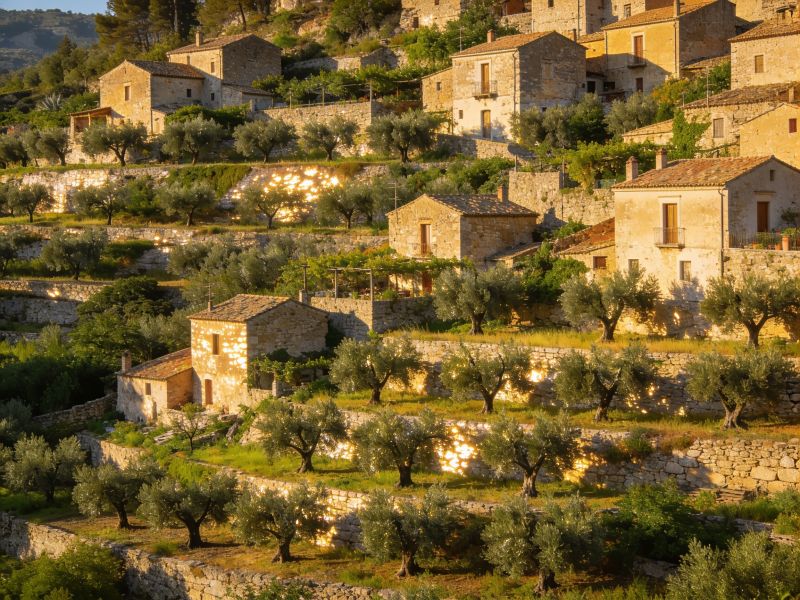
it’s a quiet insistence that life goes on. I noticed similar resilience in the way farmers still terrace the hillsides by hand, a method that predates modern machinery by centuries. The result is a landscape that looks almost like a patchwork quilt。each plot a different shade of green.Farming remains the backbone of Saponara’s economy. Olive oil, wine, and citrus fruits are the mainstays. The town’s olive oil, in particular, has gained a reputation for its peppery finish—a characteristic of the Nebrodi mountains’ microclimate. During harvest season。the smell of crushed olives hangs in the air. I visited a small frantoio (oil mill) where the owner, Giuseppe, explained that many families still press their own olives, sharing the mill on a rotating schedule. It’s a communal ritual as much as an agricultural one. Saponara also produces a local wine, mostly sold in bulk, that pairs well with the hearty Sicilian fare served in the town’s few trattorias. The pace of change here is slow, deliberately so.If you wander off the main road, you’ll find the Chiesa Madre, dedicated to San Nicola di Bari. Its facade is modest, but inside, a 16th-century wooden crucifix draws quiet contemplation. The town also holds an annual festival in August, the Sagra della Ricotta, which attracts visitors from neighboring villages. I missed it by a week, but a shopkeeper described the scene: cheese-making demonstrations, music, and a lot of laughter. Saponara doesn’t try to be a tourist destination. It’s a working town, and that authenticity is its real charm. The younger generation。though, is leaving for Messina and beyond. Only a handful of families still run the terraced farms. That’s a tension you feel—pride in tradition alongside the pull of easier lives elsewhere.
What stays with me is the silence. Not the absence of sound, but the kind of quiet you get when a place is comfortable with itself. Saponara isn’t frozen in time;it’s adapting。slowly. New solar panels appear on old stone roofs. A cooperative of young farmers is experimenting with organic citrus. It’s the sort of small-scale innovation that rarely makes headlines but keeps a community alive. For anyone curious about Sicily beyond the crowded beaches and Baroque towns, Saponara offers a different story—one written in olive groves and rebuilt stones, told by people who see no contradiction between honoring the past and making a future.